
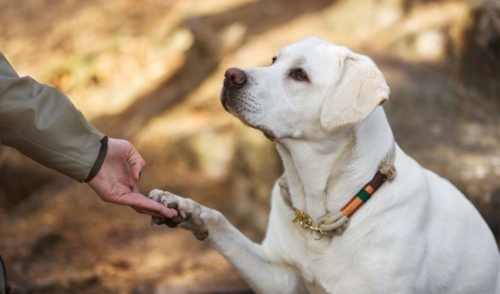
Dogs are friendly, social animals, and a proper greeting is essential to establish and maintain the correct, safe human-dog relationship in a pack hierarchy. Whether you are greeting your own pet, a friend’s familiar dog, a working animal, or any other dog, knowing how to greet a dog the right way can make introductions much smoother for you and the animal.
How you greet a dog is your first impression on the animal and helps establish your place in the dog’s pack. This will influence how the dog may respond to your voice, gestures, and commands, or how it treats your behavior. Meeting strangers can be stressful for many dogs, and a poor greeting can trigger anxiety, fear, or aggression. Even the most well-trained, socialized, and gentlest dog can and will bite if it is scared or startled, and a poor greeting to a stressed out animal may be a dangerous trigger. A proper greeting, on the other hand, establishes safe boundaries, reinforces good training and desirable behavior, and ensures the safety of both the animal and the human.
Greeting a dog properly involves more than just petting or smiling, and it is important to understand both the animal’s signals as well as its owner’s desires both before and during a greeting.
Not every dog introduction or greeting will be a successful one, and it is important not to take poor greetings personally or respond in damaging ways by punishing the animal. Stay alert to the dog’s body language and personality every time you meet it, and as it greets you more often, it will learn the best way to respond and each greeting will be smoother and safer for both the dog and everyone it meets.
There are some dogs that should not be greeted except under very specific circumstances. Any service dog should be left alone to do its job for its owner or handler, and not treated as a sociable pet unless you are invited to make introductions. Similarly, working dogs such as police, military, or drug-detection dogs should not be treated with casual familiarity unless they are specifically serving in an ambassador, meet-the-public setting and such greetings are welcomed. Dogs in formal shows are also working at that time and should be treated respectfully, and dogs in a veterinarian’s office or any similarly stressful setting are best left alone, as the additional stress of a stranger’s greeting could increase their anxiety or create a dangerous interaction. Finally, an owner is the ultimate final answer in whether or not a dog should be greeted, and if they say no, the dog should not be approached.
Greeting a dog can be a fun and charming interaction, if it is done safely for both the dog and the human. By knowing how to greet a dog properly, you can easily meet many different dogs and make a wide range of canine friends.